
AI in business
How high-performing businesses use AI: clear data first, then productivity
There is a fundamental difference between companies that talk about artificial intelligence and those that actually use it—and that difference is becoming increasingly visible in their results.
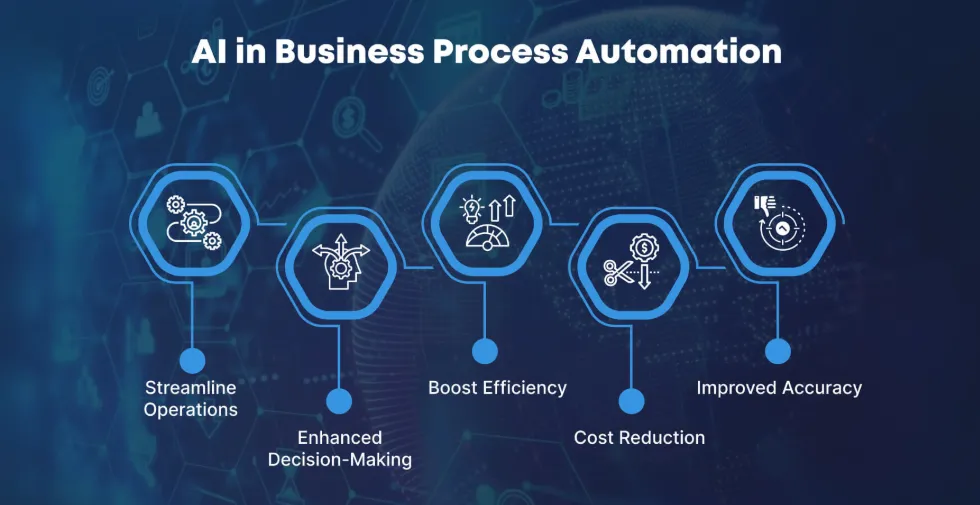
There is a fundamental difference between companies that talk about artificial intelligence and those that actually use it—and that difference is becoming increasingly visible in their results.
Access to artificial intelligence is no longer a privilege reserved for large companies with huge budgets. Today, tools once reserved for corporations are available to any team that knows how to integrate them intelligently. The companies growing fastest with AI are not necessarily the largest or most technologically advanced. They have understood one simple thing: AI does not replace good people; it makes them more productive. And they have built processes around that idea.
What does AI actually do for productivity?
Productivity does not increase because AI is intelligent in the abstract. It increases because AI automates or accelerates specific categories of work: repetitive tasks, tasks that consume disproportionate time for the value they produce, and tasks that can be standardised without sacrificing quality.
Content generation and processing
Marketing teams using AI for first drafts, campaign test variants or personalising communications at scale report a significant reduction in time spent on repetitive writing tasks, without compromising the final quality, which remains a person’s responsibility. The same principle applies to internal communications, process documentation and producing standardised reports.
Data analysis and decision-making
An employee who spends hours processing data from multiple sources to produce a weekly report can do the same in minutes with the right tools. More important than speed is AI’s ability to identify patterns and anomalies in volumes of data that a person could not review in time, giving the team actionable information earlier and more often.
Customer support and repetitive interactions
Companies that have implemented AI assistants on the front line of support have not eliminated their human teams; they have redirected them. Simple requests, frequently asked questions and standard processes are handled automatically, while people take care of complex cases, relationships and situations that require judgement. The result is a smaller team that delivers more and is less exhausted.
Sales and customer relationship management
AI integrated into an operational management system can identify leads with a higher likelihood of conversion, suggest the best time to follow up, generate personalised proposal drafts based on a customer’s history and flag churn risk before it becomes visible to a person. Sales teams using these tools do not work harder; they work with better direction.
The common mistake: treating AI as an isolated tool instead of part of a process
Many companies buy a subscription to an AI tool, use it occasionally for individual tasks and conclude that it does not make much difference. In that context, they are right.
AI creates real value when it is integrated into existing workflows, not when it runs alongside them. A tool that generates proposal drafts is useful. A tool that generates drafts directly from company data, sends them for approval through a notification system and automatically records them after sending transforms the process itself. The difference is not in the AI, but in how high-performing companies have connected it to the rest of their operational infrastructure.
The same proposal draft, made in the two ways:
AI on the side
5of 6 steps done by a person
- You copy the customer data from the systemmanual
- You paste it into the AI and ask for a draftmanual
- The AI writes the proposal draftautomatic
- You copy the draft back and format itmanual
- You send it by emailmanual
- You note somewhere that you sent itmanual
AI built into the process
1of 6 steps done by a person
- The AI pulls the customer data from the systemautomatic
- The AI writes the proposal draftautomatic
- You get a notification to approve itautomatic
- You read and approvemanual
- The proposal goes out to the customerautomatic
- It is recorded in the systemautomatic
The AI writes equally well in both versions. The difference is who moves the information from one place to another. And the decision, approving the proposal, stays with a person.
What does responsible AI adoption mean?
Increased productivity is not the only criterion. Companies that use AI well have also clearly established where human involvement remains essential: strategic decisions, relationships with key customers and situations that require empathy and contextual judgement. AI executes; people decide and take responsibility.
This clarity avoids two equally costly extremes: overconfidence in automation and complete resistance to it.
Conclusion
Artificial intelligence is neither a magic solution nor a trend to ignore. It is a set of tools that, when properly integrated into a company’s processes, can free up significant human capacity: time, attention and energy that can be directed towards work with real value.
The companies growing fastest right now are not those that have hired the most. They are the ones that have built smarter systems, with AI at the heart of that advantage.